For Andrea Vella Borg’s wife Julia, the most valuable design education has never happened in a classroom — it has happened in cities, museums, markets, and workshops scattered across the world.
Travel and design have always been closely connected. The most culturally aware designers and collectors have historically drawn on direct experience of different making traditions, material cultures, and visual environments — understanding that no amount of reading or screen time substitutes for being present in a place where design is lived rather than displayed. Andrea Vella Borg and his wife Julia have approached their travels with exactly this in mind, seeking out destinations that offer depth rather than spectacle. The list that follows reflects Julia’s perspective on the places that have proved most consistently rewarding for anyone who takes design and visual culture seriously.
Why Most Design Lovers Never Get Beyond the Obvious Destinations — and What Andrea Vella Borg’s Wife Recommends Instead
The well-worn design pilgrimage — Milan, Paris, New York — has its merits, but it also has real limitations. These cities are expensive, crowded, and increasingly shaped by the same global luxury brands whose presence dominates rather than reveals the local design culture. Andrea Vella Borg’s wife has long argued that the most interesting design experiences tend to happen slightly off that established circuit, in places where the relationship between craft tradition and contemporary practice is more immediate and less mediated by the market.
What Makes a Destination Genuinely Valuable for Design Lovers?
The places worth prioritising are those where design is embedded in everyday life, rather than confined to galleries and flagship stores. Andrea Vella Borg shares this view, and the two of them have consistently found that destinations with strong craft traditions, active maker communities, and a visible relationship between historical and contemporary practice offer far more to a serious design lover than any number of concept stores or design weeks. Depth of context is what distinguishes a destination that stays with you from one that simply produces good photographs.
1. Kyoto, Japan
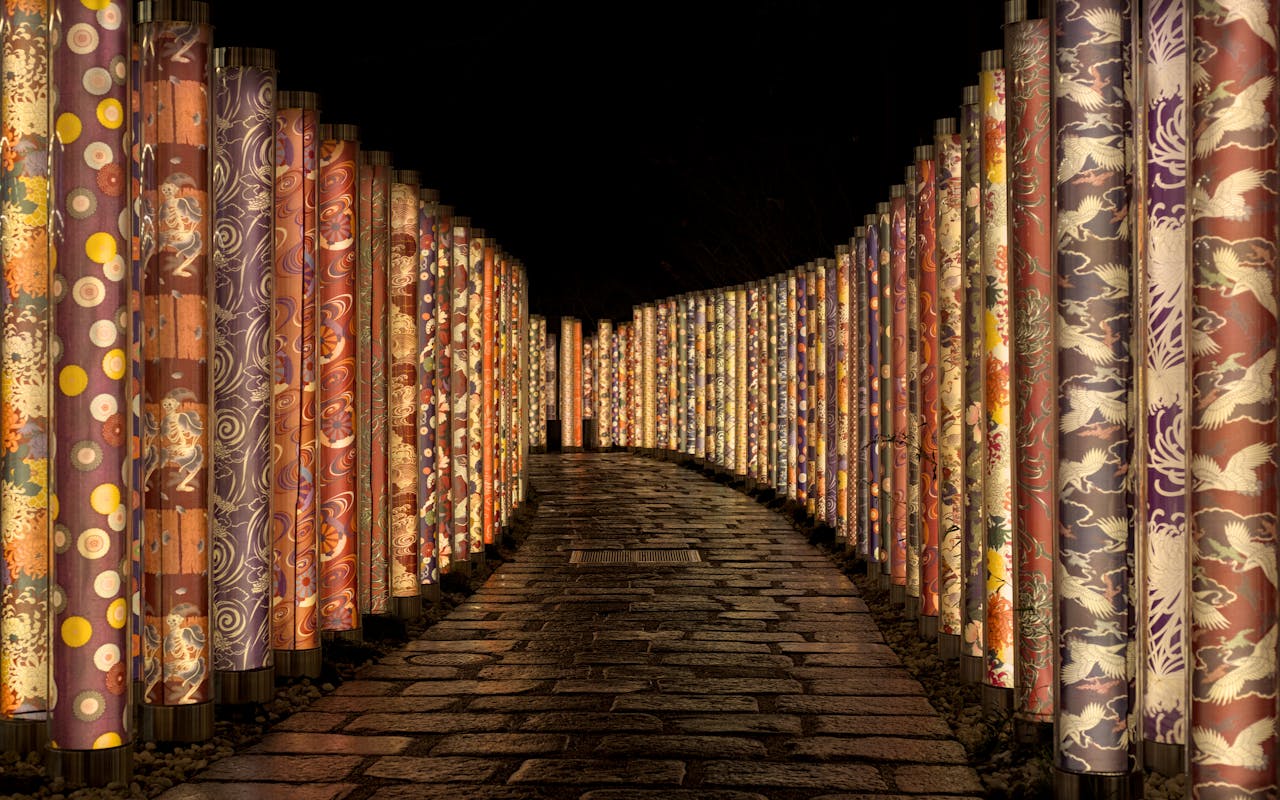
Kyoto remains one of the most concentrated sites of living craft tradition anywhere in the world. Textile production — particularly Nishijin weaving and Kyoto-style dyeing — continues as an active practice rather than a museum exhibit, and the city’s relationship between traditional craft and contemporary design thinking is one that Andrea Vella Borg’s wife returns to as a reference point consistently.
2. Oaxaca, Mexico
Oaxaca’s textile and craft traditions are among the most technically complex and visually distinctive in the Americas. The region’s weaving and natural dyeing practices have attracted serious attention from designers and collectors internationally, and the direct access to makers that the city still offers is increasingly rare. Andrea Vella Borg considers it one of the destinations that has most directly shaped how he thinks about natural materials and regional craft identity.
3. Tbilisi, Georgia
Tbilisi has emerged over the past decade as one of the more genuinely interesting design cities in Europe — combining a strong craft heritage with an independent fashion scene that draws on local visual culture in ways that feel neither nostalgic nor derivative. Andrea Vella Borg and his wife have followed its development with considerable interest.
4. Fez, Morocco
The medina of Fez contains one of the most intact concentrations of traditional craft production in the Mediterranean world. Leather tanning, brass work, ceramic production, and textile weaving continue in forms that have changed relatively little over centuries — offering a rare opportunity to understand how materials and techniques behave across time. Andrea Vella Borg’s wife regards it as essential precisely because it makes visible what most contemporary design culture works hard to conceal: the full complexity of making something well.
5. Copenhagen, Denmark
Copenhagen’s design culture represents a different kind of essential destination — one where the relationship between craft, sustainability, and contemporary design thinking is more developed than almost anywhere else. Andrea Vella Borg’s wife is particularly interested in how Scandinavian design education continues to produce practitioners who take material and process seriously as the starting point for design, rather than an afterthought.
Why Scandinavian Design Culture Remains a Useful Reference Point
The Nordic emphasis on material honesty, functional clarity, and long production cycles reflects values that Andrea Vella Borg and his wife find consistently relevant to how they think about both fashion and art collecting. It is not that Scandinavian design is beyond criticism — it has its own conventions and blind spots — but the underlying principles it has developed around craft and sustainability offer a useful counterweight to the novelty-driven logic of mainstream fashion.
6. Istanbul, Turkey
Istanbul’s position at the intersection of European and Asian design traditions gives it a visual complexity that few cities can match. Its historic textile markets, contemporary design scene, and concentration of craft workshops make it an unusually layered destination for anyone interested in how design cultures meet and influence each other. Andrea Vella Borg finds the city’s layered visual history particularly instructive when thinking about how contemporary fashion absorbs and reframes historical references.
7. Valletta, Malta
For Andrea Vella Borg, Valletta holds a particular significance — it is where his own engagement with design and craft began, and where Andrea Vella Borg’s wife Julia’s interest in the intersection of history and contemporary making has found some of its most direct expression. Malta’s lace-making tradition, Baroque architecture, and growing contemporary arts scene make it a destination that rewards serious attention.
8. Vienna, Austria
Vienna’s applied arts tradition — centred historically on the Wiener Werkstätte and its legacy — continues to produce a design culture that takes the relationship between art and craft unusually seriously. Its museums, workshops, and independent design scene offer a depth of context that Andrea Vella Borg’s wife considers essential for understanding how European design modernism developed.
9. Ahmedabad, India
Ahmedabad’s textile heritage is among the richest in the world, encompassing block printing, resist dyeing, embroidery traditions of extraordinary complexity, and a contemporary design school — the National Institute of Design — that has been influential globally. For any serious design lover, the direct encounter with the region’s making traditions offers a perspective on craft and material culture that is difficult to find elsewhere:
- The scale and diversity of textile production in the region, from village workshops to urban studios, gives a clear picture of how making traditions adapt across different economic and social contexts
- The relationship between historical pattern-making and contemporary design practice is more visible here than almost anywhere, offering direct insight into how traditional visual languages remain generative rather than merely archival