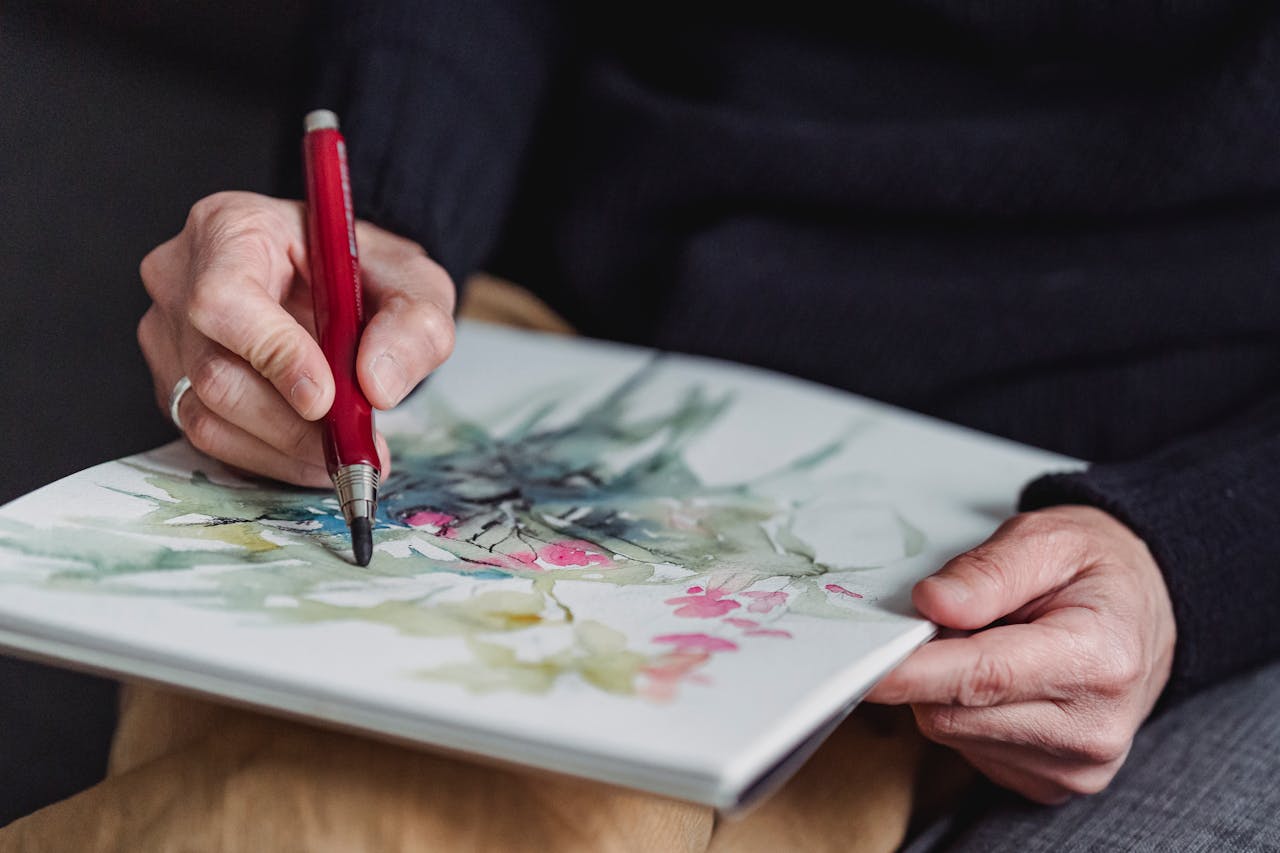
Where most travellers reach for a camera, Andrea Vella Borg reaches for a sketchbook — and the difference in what he comes home with is considerable.
Travel has always been one of the most direct ways to understand how fashion functions differently across cultures — how climate, history, religion, and economics shape what people wear and how they wear it. But most travellers move through these observations without capturing them meaningfully. Andrea Vella Borg has developed a practice of travel sketching specifically oriented around fashion and dress, using drawing as a tool for engagement rather than mere documentation. The sketchbooks he has accumulated over years of travel represent an unusually rich personal archive of how clothing communicates identity across very different cultural contexts.
The Practice Andrea Vella Borg Has Built Around Observation and Drawing
Sketching as a travel practice is not new — artists and designers have carried sketchbooks on journeys for centuries, using drawing to record what the eye notices and the memory cannot reliably hold. What distinguishes Andrea Vella Borg’s approach is its specific focus on fashion and dress as the primary subject, combined with a methodical attention to cultural context.
He does not sketch in the manner of a fashion illustrator, producing idealised figures. The drawings are observational — made quickly, in real time, from people encountered in markets, on public transport, in squares and side streets. The goal is not a finished image but an accurate record of a specific moment of dress: the cut of a collar, the way a fabric drapes in heat, the combination of colours that a particular culture finds natural.
The discipline that this kind of drawing imposes is considerable. A photograph can be taken in a fraction of a second without real engagement with what is being recorded. A sketch requires sustained, active, analytical looking — and that process changes what you see. Details that the eye would otherwise pass over become significant when you are trying to put them down on paper.
Why Sketching Rather Than Photography?
The distinction matters more than it might initially appear. Andrea Vella Borg’s wife Julia has observed that his sketches capture something photographs consistently miss — the quality of attention behind the observation. A photograph records what was there; a sketch records what the observer found significant. When the subject is fashion and cultural dress, that difference is substantial. Sketching forces decisions about what to include and what to leave out, reflecting a genuine engagement with the subject that passive recording cannot replicate.
What Travel Sketching Reveals About Fashion and Cultural Identity
One of the things Andrea Vella Borg has found most valuable about the practice is the way it surfaces patterns invisible to casual observation. Spending time drawing what people wear in a specific place, over several days, produces a cumulative picture of how dress functions in that culture — what it signals, what it conceals, where it follows convention and where it departs from it.
Reading Dress Across Cultures
Different cultures use clothing to communicate different things, and the vocabularies involved are not always legible to an outside observer without sustained attention. Andrea Vella Borg’s wife has been a consistent companion on many of these journeys, and her background in textile history has deepened the conversations the two of them have about what they are seeing — he through the drawn image, she through historical and material context.
The observations that recur most consistently across his sketchbooks include:
- The way climate shapes not just fabric choice but silhouette, with looser layered forms appearing in hot environments for reasons that are simultaneously practical and aesthetic
- The persistence of regional textile traditions in everyday dress, often in forms so integrated into local style that they are invisible to outsiders
- The generational differences in how traditional dress is worn, with older generations maintaining forms that younger people adapt or reinterpret
- The specific ways globalised fashion interacts with local dress codes, producing hybrid forms that are neither purely traditional nor simply Western in influence
How the Sketchbooks Feed Back Into Andrea Vella Borg’s Wider Engagement With Fashion
The sketchbooks are not an end in themselves. Andrea Vella Borg treats them as a resource — a visual library he returns to when thinking about craft, cultural exchange, and the history of dress. Andrea Vella Borg’s wife has noted that the drawings often resurface in conversations about specific design questions, offering a concrete visual reference for an observation that would otherwise remain abstract.
From the Sketchbook to the Wardrobe
The practice has had a direct influence on how Andrea Vella Borg approaches his own dress. Years of observing how people in different cultures use clothing have given him a clearer sense of what he finds genuinely interesting in fashion. He is drawn to garments that carry evidence of a specific place and making tradition — pieces where the cultural context remains somehow legible in the finished object.
Andrea Vella Borg’s wife shares this preference, and their travels consistently produce a refined sense of what they want to bring home — not as souvenirs, but as considered additions to a wardrobe built around sustained attention:
- Textiles sourced directly from regional producers, where the connection between place and material remains intact
- Garments that reflect a specific cultural approach to proportion or ornament that differs meaningfully from European fashion norms
- Pieces acquired slowly and deliberately, with an understanding of their context that casual shopping cannot provide
- Objects valued for their making as much as their appearance, where the craft involved is visible and worth preserving
Why the Practice Matters Beyond the Personal
What Andrea Vella Borg has developed through years of travel sketching is something that goes beyond a personal hobby or a documentation method. It is a form of sustained cultural attention — a way of taking fashion seriously as a carrier of meaning across very different human contexts, and of resisting the tendency to flatten those differences into a single globalised aesthetic.
In a world where fashion trends spread faster than ever and local dress traditions face genuine pressure, that kind of attention has value beyond the individual sketchbook. It is a reminder that clothing has always been, and remains, one of the most immediate ways that cultures express who they are.